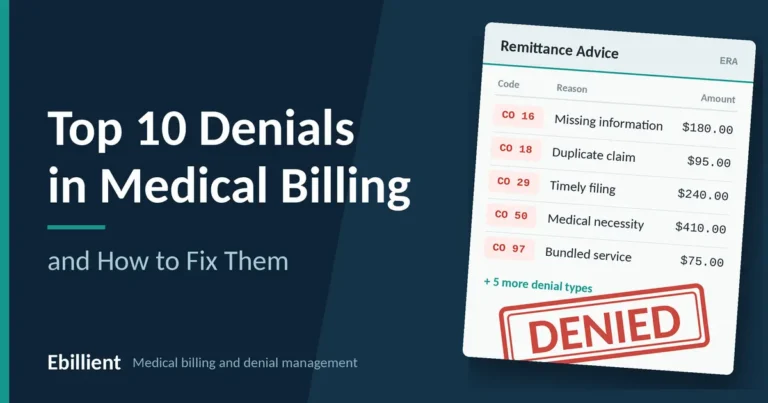

Every denied claim means delayed payment, extra staff hours, and revenue your practice has already earned. The frustrating part is that most denials are not caused by complex clinical disputes. They come from small, preventable errors in registration, coding, documentation, and timing.
The scale of the problem is large. A KFF analysis of federal data found that ACA Marketplace insurers denied nearly one in five in network claims in 2024, and fewer than 1% of denials were appealed by members. Whether you run a solo clinic or a multi specialty group, understanding why insurance claims are denied is the first step toward protecting your cash flow.
This guide covers the ten most common reasons for claim denials and the practical steps that help prevent them.
Why Insurance Claim Denials Hurt Your Practice
A denial is more than a rejected payment. Each one triggers a chain of extra work: investigating the reason, correcting the claim, gathering records, filing an appeal, and waiting again. That work adds days to your accounts receivable, increases administrative costs, and pulls staff away from patients.
Practices that treat denials as a process problem rather than a one time event see the biggest improvement. Fixing the root cause is always cheaper than reworking the same claim repeatedly.
The Top 10 Reasons Insurance Claims Are Denied
1. Incorrect or Incomplete Patient Information
Misspelled names, wrong dates of birth, mismatched policy numbers, and missing demographic fields are among the simplest and most common causes of denial. Payers compare every field against their records, and a single mismatch can stop a claim.
How to prevent it: Collect and confirm patient details at every visit, and scan insurance cards each time. A short verification script at check in saves hours of rework later.
2. Insurance Eligibility and Coverage Issues
Claims are denied when coverage has ended, the policy is inactive, or the patient’s plan does not cover the service. This often happens when eligibility is checked once and never confirmed again.
How to prevent it: Verify benefits and eligibility before every appointment, not just the first one. A dedicated insurance verification service catches coverage problems before the patient is seen and prevents front end denials.
3. Missing or Invalid Prior Authorization
Many procedures, imaging studies, and specialty services require approval before they are performed. If authorization is missing, expired, or does not match the billed service, the claim is typically denied with no payment.
How to prevent it: Build a payer by payer list of services that need authorization, and track approval numbers and expiry dates inside your system. Never schedule a high cost service until authorization is confirmed.
4. Coding Errors and Missing Modifiers
Incorrect CPT codes, outdated diagnosis codes, unbundled services, and missing modifiers are leading causes of denials. Coding rules change every year, and each payer applies its own edits on top of national standards.
How to prevent it: Use certified coders, update your code sets every year, and run claims through a scrubber before submission. Regular coding audits also help you spot patterns before payers do.
5. Lack of Medical Necessity
Payers deny claims when the documentation does not clearly show why a service was needed. A correct code attached to a thin clinical note still fails review.
How to prevent it: Make sure the diagnosis, symptoms, and treatment plan in the chart support every billed service. Train providers to document the reason for each test or procedure, not just the result.
6. Missed Timely Filing Deadlines
Every payer sets a deadline for claim submission, and late claims are denied automatically. The rules are strict even for Medicare. Medicare fee for service claims with dates of service on or after January 1, 2010 are denied when received more than one calendar year after the date of service. You can review the official guidance in this CMS timely filing instruction.
How to prevent it: Submit claims within days of the visit, and keep a chart of filing limits for each payer. Set alerts for unbilled encounters so nothing slips past the deadline.
7. Duplicate Claim Submissions
When the same service is billed twice, payers deny the second claim as a duplicate. This usually happens when staff resubmit a claim without checking its status, or when paper and electronic versions are both sent.
How to prevent it: Check claim status before any resubmission, and use one clear submission method. Good tracking inside your billing system makes this almost entirely avoidable.
8. Services Not Covered Under the Patient’s Plan
Some claims are denied because the service falls outside the patient’s benefits, such as cosmetic procedures or treatments the plan labels experimental. Billing these repeatedly can also draw unwanted payer attention.
How to prevent it: Confirm coverage for planned services during verification, and discuss expected costs with patients before treatment. When a service may not be covered, have the patient sign a financial responsibility form.
9. Out of Network Care and Credentialing Problems
If a provider is not enrolled or credentialed with a payer, claims may be denied even when everything else is correct. Delays in enrollment, expired credentials, and incorrect provider details cause the same result.
How to prevent it: Track credentialing and revalidation dates for every provider. Confirm network status before scheduling patients, and make sure new providers are fully enrolled before they begin seeing insured patients.
10. Coordination of Benefits and Billing Order Errors
When a patient has more than one insurance plan, claims must go to the correct payer first. Billing the wrong plan as primary leads to denials and long payment delays.
How to prevent it: Ask about all active coverage at every visit, and confirm which plan is primary. Update records right away when a patient reports a new policy or a change in status.
How to Reduce Claim Denials in Your Practice
Fixing ten individual problems is easier when you build a system around them. These habits make the biggest difference:
- Verify eligibility and benefits before every visit
- Confirm prior authorization before scheduling covered services
- Scrub every claim for coding and data errors before submission
- Submit claims quickly and track payer deadlines
- Analyze denial trends monthly to find the root causes
- Appeal denied claims promptly with complete documentation
Many denials can be overturned when practices follow up quickly. A structured denial management and AR recovery process turns appeals from an occasional task into a steady source of recovered revenue.
Frequently Asked Questions
What is the most common reason insurance claims are denied?
Errors in patient information, eligibility, and coding are the most frequently cited causes. Most of these are administrative mistakes that can be prevented with better front end checks and claim review.
What is the difference between a rejected claim and a denied claim?
A rejected claim fails basic data or format checks and never enters the payer’s system for processing. It can usually be corrected and resubmitted quickly. A denied claim is processed and then refused, and it typically requires an appeal or a corrected submission.
Can a denied insurance claim be appealed?
Yes. Most payers allow appeals, but they have strict time limits and documentation rules. Review the denial reason on the explanation of benefits, gather supporting records, and submit the appeal as early as possible.
How long do I have to resubmit a denied claim?
It depends on the payer and the type of denial. Medicare allows one calendar year from the date of service for filing, and commercial payers often set shorter limits. Always check each payer’s contract.
How can a medical billing company help reduce denials?
A billing partner brings trained coders, payer specific knowledge, claim scrubbing, and consistent follow up. This lowers error rates and shortens the time between service and payment.
Conclusion
Most insurance claim denials come from the same ten causes, and nearly all of them can be prevented with accurate data, verified coverage, correct coding, solid documentation, and fast submission. Practices that address these areas see fewer rejections, faster payments, and less pressure on their teams.
If denials are slowing down your revenue, Ebillient can help. Request a free medical billing audit to find where your claims are leaking revenue and get a clear plan to fix it.